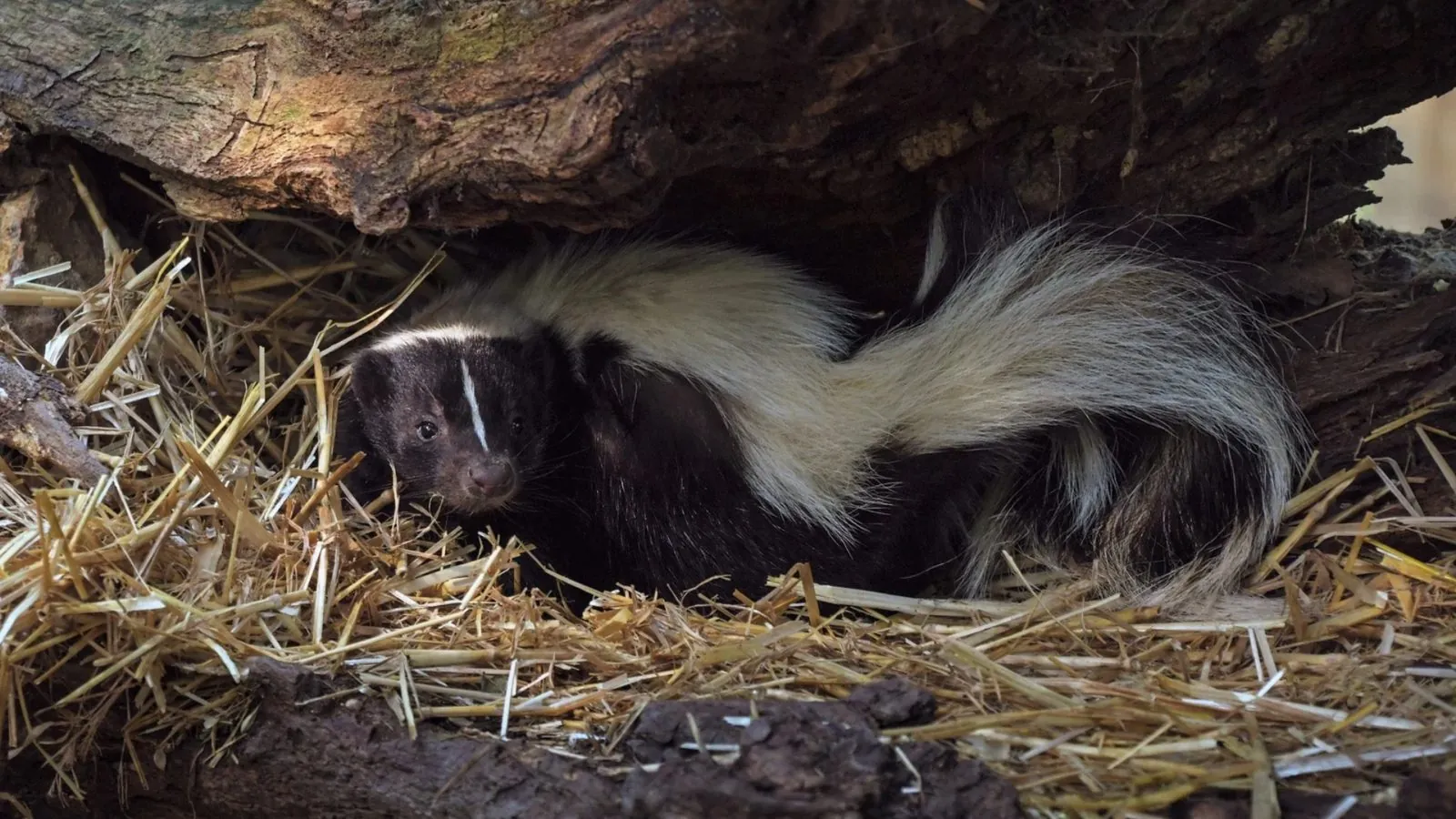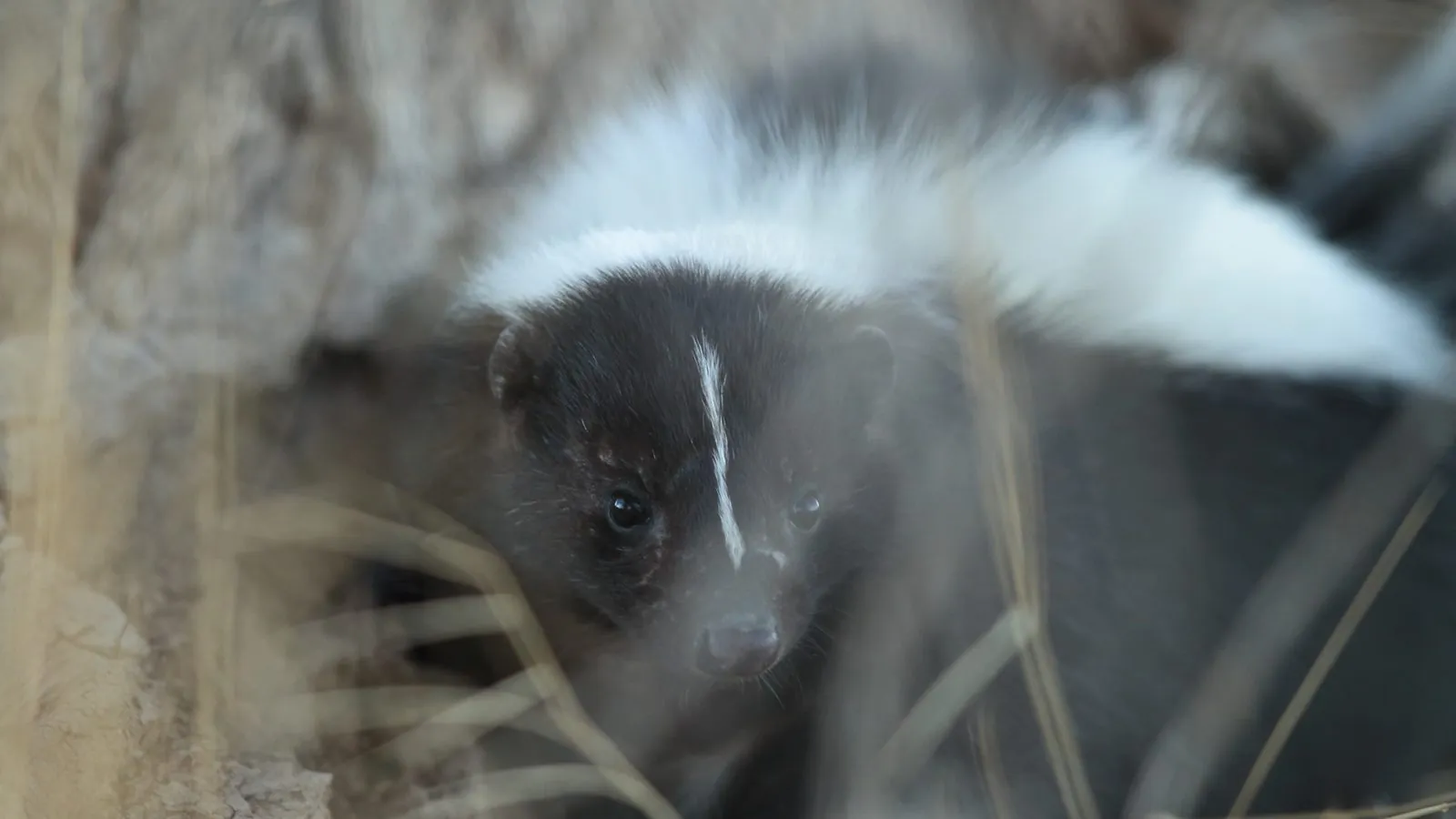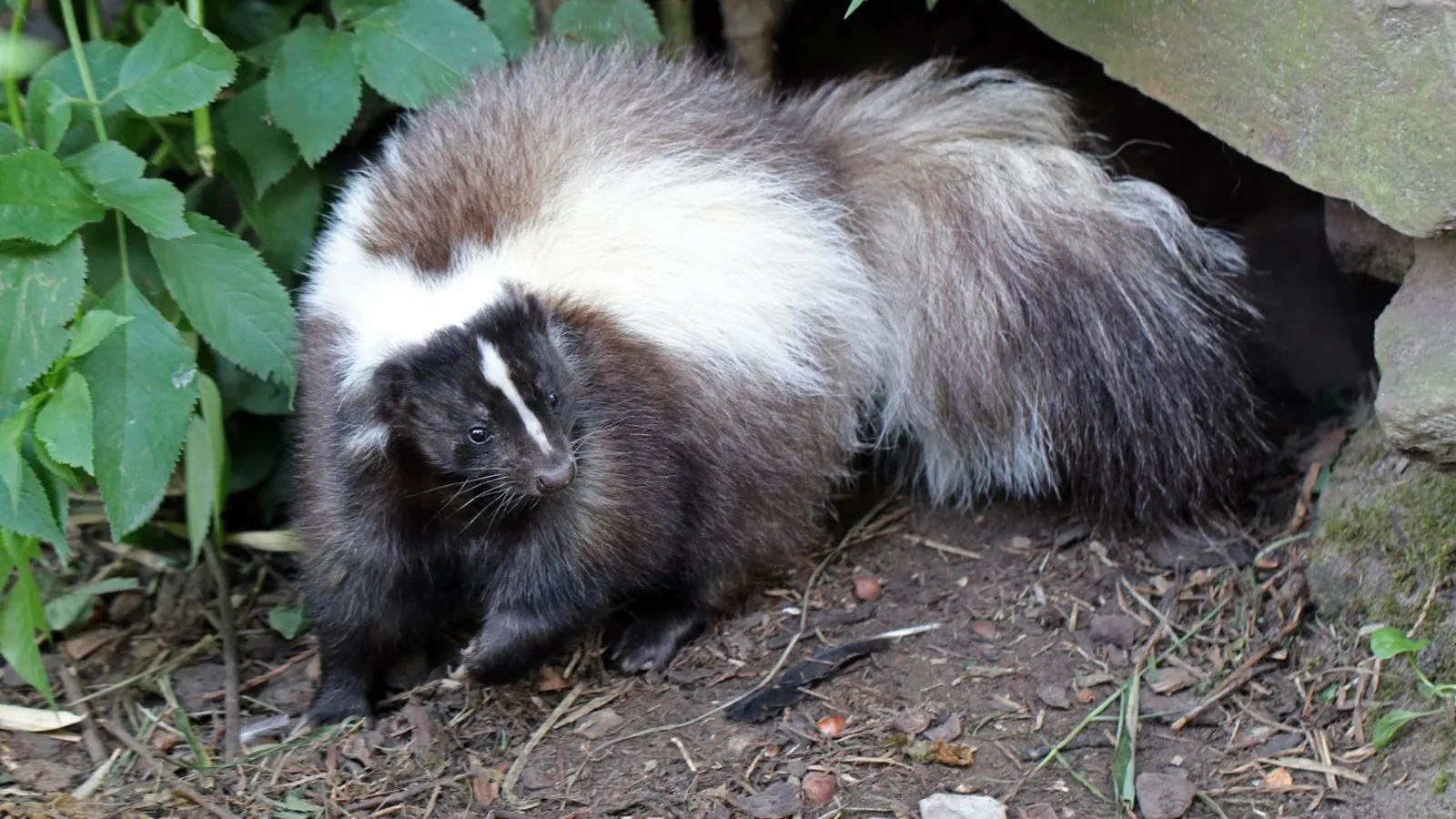
Smelling skunk around your home? Seeing one disappear under a deck, porch, shed, or other structure? A skunk that settles close to the house can quickly become more than an occasional backyard visitor.
Heidel’s Wildlife Control Service helps homeowners identify skunk activity, address nuisance animals safely and professionally, and reduce the conditions that make areas around the property attractive for denning.
From Alton and Godfrey to Edwardsville, Highland, and surrounding Metro East communities, we’re here to help you figure out what is happening and the right next step.
Skunks are mostly active at night, so you may notice the smell or signs around the property before you actually see the animal.
Common signs can include:
Persistent skunk odor around the house or yard
A skunk entering or leaving a space under a deck, porch, shed, or addition
Shallow cone-shaped holes or disturbed turf where skunks have been searching for food
Tracks or nighttime activity around garbage, pet food, or other food sources
A den opening near a structure or landscaped area
Repeated sightings in the same part of the property
If you know a skunk is nearby but are not sure whether it is simply passing through or has taken up residence, Heidel’s can help assess the situation.
Skunks look for sheltered places to rest and raise young, along with easy access to food. Spaces under decks, porches, sheds, additions, and other low structures can provide the kind of protected den site they are looking for.
Yards can also attract skunks when food is readily available. Grubs and insects in lawns, pet food, unsecured garbage, fallen fruit, and other food sources may bring them close to the house.
Seeing a skunk once does not always mean it is living on the property. Repeated activity in the same location, however, can be a sign that the animal has found a den or dependable food source nearby.
Heidel’s looks at the full situation so the response can match what is actually happening on the property.
The smell is usually what gets everyone’s attention, but skunks can create other problems around a property as well.
Skunks may dig in lawns while searching for insects and can make use of openings under decks, sheds, porches, and other structures for shelter. When a skunk is denning close to a home, the possibility of spraying can make normal use of the yard or outdoor areas difficult.
Pets can also turn a manageable skunk problem into a much smellier one if they confront the animal.
The right solution depends on whether the skunk is simply moving through, feeding on the property, or actively using a den. Heidel’s can help determine what is happening and recommend the appropriate response.
Every skunk problem is different. Heidel’s starts by looking at where the animal is being seen, whether it appears to be denning on the property, and what may be attracting it.
The goal is to address the immediate nuisance wildlife problem and, where practical, reduce the conditions that encourage the same problem to happen again.
We look at where skunks are being seen, signs of denning or feeding, and the areas around the property that may be contributing to the problem.
When removal is needed, Heidel’s uses professional nuisance wildlife control methods appropriate for the situation and consistent with Illinois requirements.
We look for likely den sites and conditions that may be attracting skunks, such as accessible spaces beneath structures or dependable food sources around the property.
After the immediate problem is addressed, we can recommend practical steps to make the property less inviting to skunks.
Depending on the situation, that can include securing access beneath structures, addressing food sources, or making other property-specific changes that reduce the chance of another animal settling in the same place.
Removing a nuisance skunk addresses the immediate problem, but it is also worth looking at why the property was attractive in the first place.
Areas beneath decks, porches, sheds, and additions can become protected den sites when skunks can easily get underneath them. Food sources such as pet food, unsecured garbage, fallen fruit, and other attractants can also encourage repeated activity.
After the skunk problem is addressed, Heidel’s can recommend practical prevention steps based on the property. That may include:
Securing access beneath decks, porches, sheds, or other structures
Identifying areas that could become future den sites
Reducing accessible food sources around the property
Addressing vulnerable areas where wildlife repeatedly shelters
Looking at the property as a whole for other nuisance wildlife concerns
For more information about protecting structures from nuisance wildlife, see our Wildlife Exclusion & Animal Proofing service.
Repeated activity at the same opening is one of the strongest signs. You may see a skunk entering or leaving the area around dusk or at night, notice persistent odor near the structure, or find a visible opening leading underneath.
Give the animal plenty of space and keep pets away from it. Avoid cornering or trying to handle the skunk yourself. If it is repeatedly using the property or appears to be denning near the house, Heidel’s can help assess the situation and recommend the next step.
Skunks spray primarily as a defense when they feel threatened. Giving them space and avoiding sudden close encounters reduces the chance of a spray. Professional handling is especially useful when a skunk has settled beneath or close to a structure.
Skunks commonly dig shallow holes while searching for insects and other food in the soil. A few isolated holes may simply mean an animal passed through, while repeated digging can indicate that the yard is providing a dependable food source.
Yes. Once the immediate skunk problem is addressed, Heidel’s can recommend ways to secure accessible areas beneath decks, porches, sheds, or other structures and reduce conditions that may encourage another skunk to use the same location.
Illinois has specific requirements for nuisance skunks, so removed animals are handled according to state regulations rather than simply being released somewhere else. Heidel’s can explain the appropriate process for your situation.
The cost depends on the situation, including where the skunk is located, whether it is denning beneath a structure, and what work is needed to solve the problem. Contact Heidel’s at 1 (618) 314-3163 so we can learn more and recommend the appropriate next step.
Heidel’s provides skunk removal service throughout Alton, Godfrey, Edwardsville, Highland, and surrounding Metro East communities. If you are unsure whether your property is within our service area, give us a call at 1 (618) 314-3163.
Heidel’s Wildlife Control Service has been helping property owners solve nuisance wildlife problems since 2006. We provide professional skunk removal and wildlife prevention services throughout Alton, Godfrey, Edwardsville, Highland, and surrounding communities.
Whether you have a skunk under the deck, persistent odor around the property, lawn damage, or repeated nighttime activity, we’re ready to help you figure out what is happening and the right next step.